Use our baccarat glossary by starting with the question in front of you: a total that looks wrong, a symbol you do not recognise, a shoe reset or a payment you cannot explain. Those problems involve different kinds of rules. We group the terms by that job, with direct links to the detailed examples, and distinguish conventional baccarat terminology from the matchup and betting window features of Avantage Baccarat.
Summary
- Card values determine the score; drawing rules determine additional cards.
- Roadmaps describe completed history in different ways.
- A pair and a point total test different properties.
- A shoe is different from one round.
- A wager name never replaces its full settlement condition.
“Why does that hand total five?”
Baccarat keeps the final digit of the card total. Seven plus eight therefore scores five. Aces count as one; tens and picture cards count as zero; the other ranks keep their face values. Our beginner guide explains the completed hand sequence before you need to interpret any scoreboard.
Player, Banker and natural
Player and Banker name the designated hands in conventional baccarat. They do not automatically mean the individual customer and the person dealing cards. A natural is an initial two card eight or nine, not any favourable result. Those definitions matter when a side bet requires a particular hand or specifically excludes a two card result.
- For a score, add card values and retain the final digit.
- For an extra card, consult the drawing rule.
- For a three card bet, distinguish a natural.
- For picture cards, distinguish point value from rank.
“Which panel am I looking at?”
| Panel | Read it to understand |
|---|---|
| Bead Plate | The chronological sequence, including each tie |
| Big Road | Runs of winning sides and attached tie marks |
| Big Eye Boy | A comparison recorded with hollow rings |
| Small Road | A further structural comparison using solid dots rather than hollow rings |
| Cockroach Road | A longer comparison recorded with diagonal slashes |
Bead Plate and Big Road record outcomes differently. The first fills a chronological grid; the second groups runs. Big Eye Boy, Small Road and Cockroach Road derive comparisons from the Big Road. Their red and blue colours do not directly mean Banker and Player. A panel title is therefore essential context for an unfamiliar coloured mark.
- Bead Plate gives the chronological sequence.
- Big Road groups runs and tails.
- Derived roads need their own comparison rules.
- A preview is not completed history.
- Align shoe and round identifiers across screenshots.
“Did the dealer start a new shoe?”
A shoe can mean the physical card container or the sequence dealt from a prepared stack. A round is one contest within that sequence. Starting another scoreboard column is not evidence that the cards were reset. Look for the explicit shoe information and the actual preparation procedure.
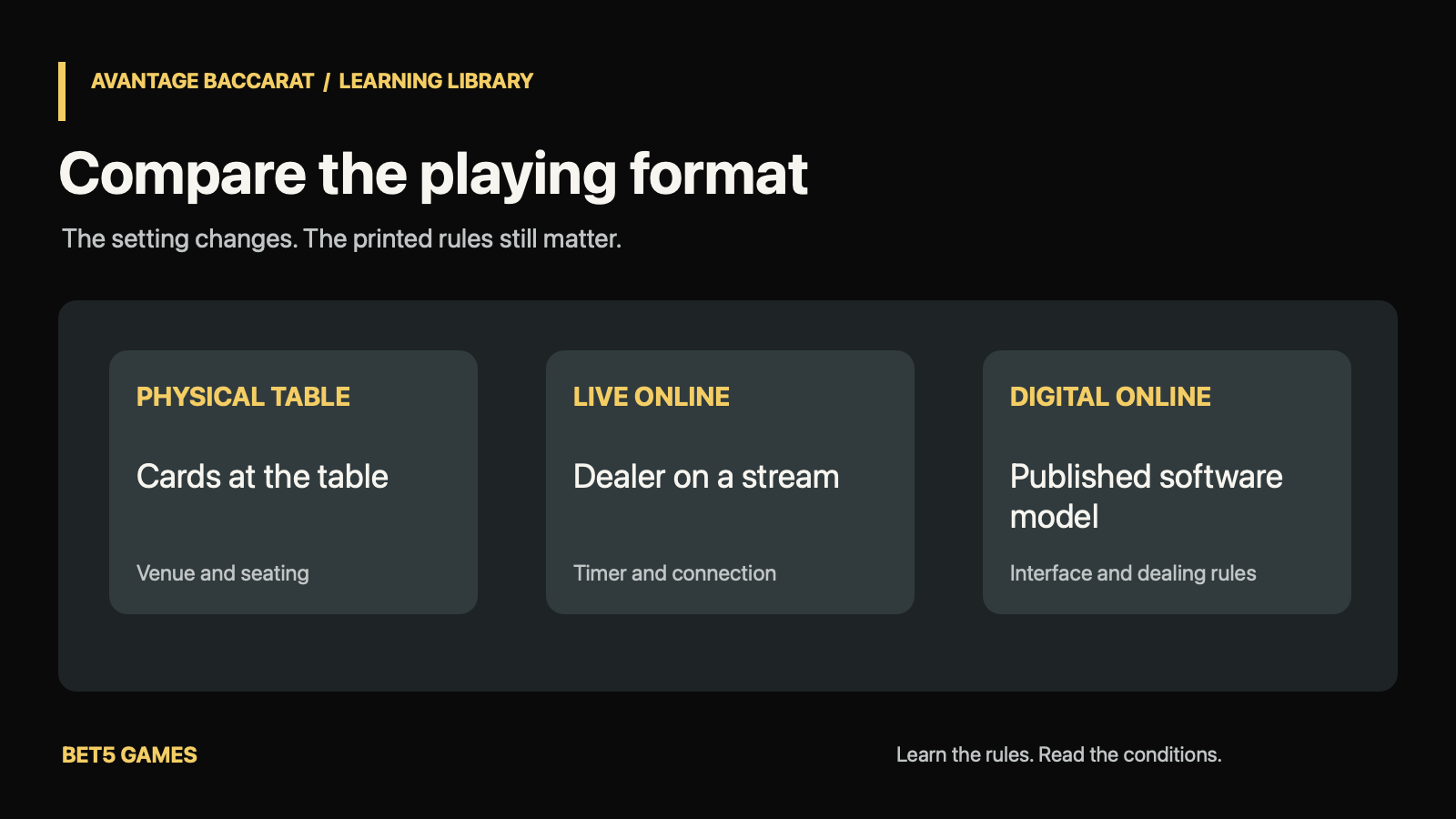
A shuffle changes card order, while cutting and burning perform different tasks. Physical and digital games can use different preparation models. The exact rules matter more than the appearance of an animation or the thickness of a stack shown on camera.
“Why did that side bet lose?”
| Term | The key condition to check |
|---|---|
| Either Pair | Matching initial ranks on either covered hand, under that table’s rules |
| Panda 8 | A winning Player eight made with exactly three cards; tied eights fail |
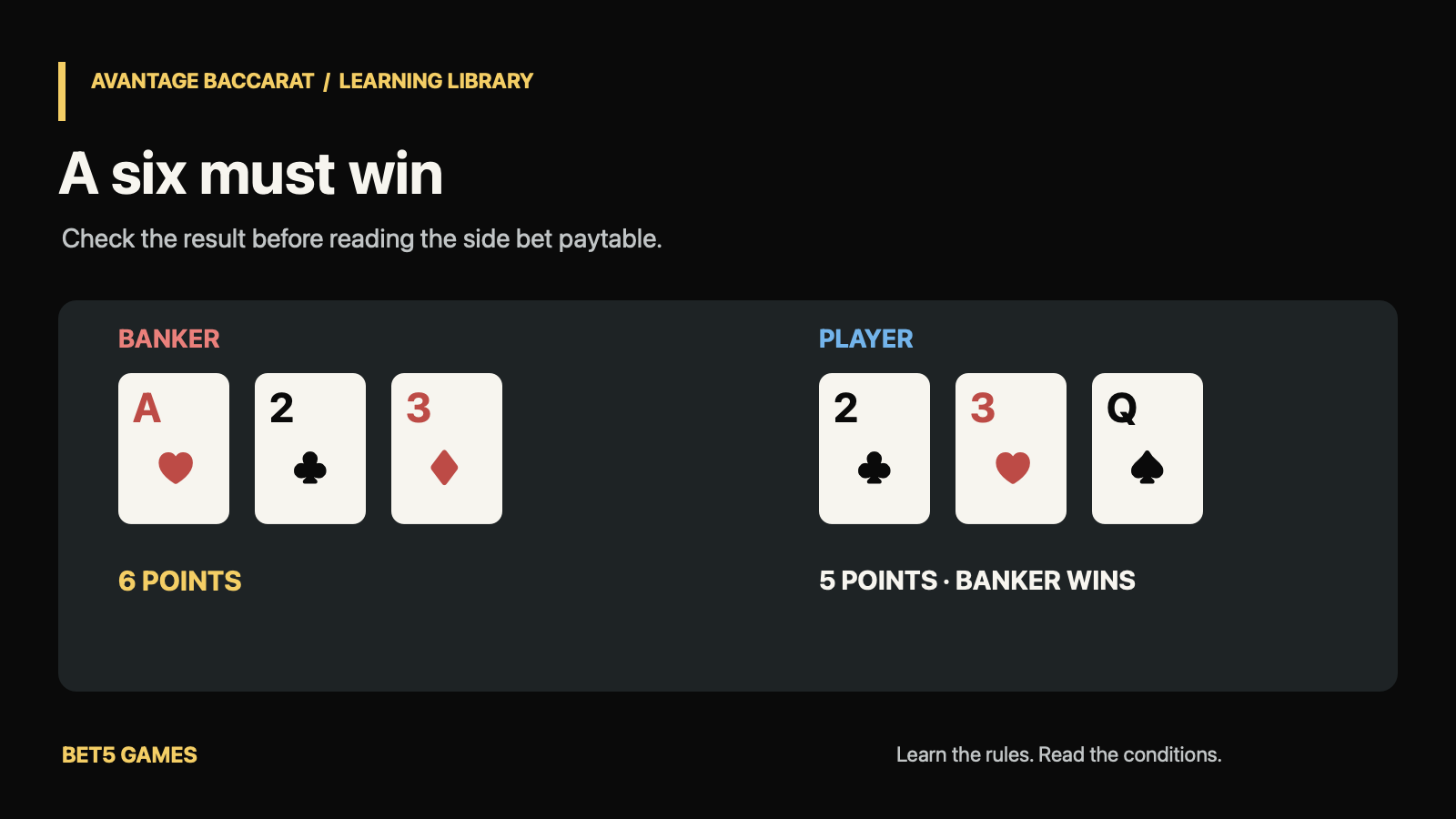
| Lucky 6 | A qualifying Banker win on six, checked against its own stated paytable |
A main hand can win while an optional side wager loses. The two chips may cover different events. Start with the accepted wager name, then check its required hand, initial ranks, card count and final outcome. Only after the event qualifies should you calculate the return from the printed paytable.
- A pair tests rank, not equal point values.
- A winning condition normally excludes a tie.
- Three cards exclude a two card natural.
- An annotation does not establish an accepted wager.
- Main Banker and Lucky 6 payments settle separately.
“Does this term mean the same thing in Avantage Baccarat?”
Our Avantage Baccarat format uses six players, a rotating bank, five player versus bank matchups and additional betting windows. That structure changes the decisions available during play. A conventional glossary can explain card values and road names without establishing the exact conditions of an Avantage Baccarat wager.
Read matchup and window terminology in the context of the game you are actually joining. A familiar Player or Banker label does not make every conventional side bet available, and a later opportunity does not guarantee a winning return. Keep format identification ahead of a remembered rule.
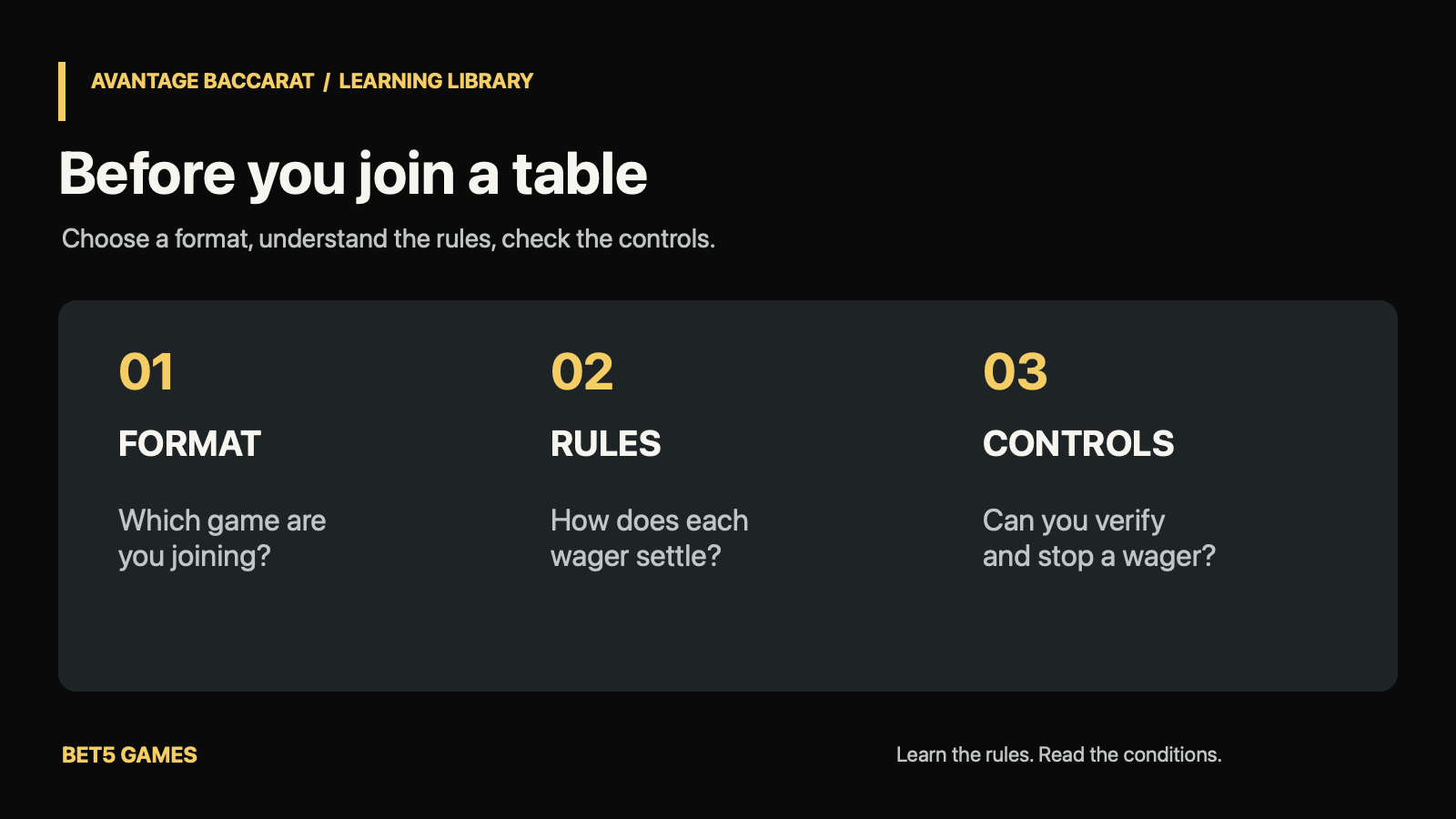
- Identify the game and matchup first.
- Read the current wager’s conditions at its available window.
- Keep the complete session exposure visible across separate decisions.
- Use the official accepted round record when a credit needs review.
- For an unusual payout, retain the paytable version shown for that game rather than relying on an old promotional image.
For the practical sequence from choosing a game to reviewing a round, continue to our casino and online play guide.
FAQs about baccarat terminology
Where should I begin if I cannot follow a complete hand?
Start with card scoring and drawing rules in the beginner guide. Roadmaps and side bet terminology make more sense once you can explain the two completed hand totals.
Why do two tables use similar wager names differently?
Providers can attach different conditions or paytables to similar labels. Compare the written event and return rather than relying on the nickname.
Can several matching road colours confirm a future winner?
They can describe the same completed history through different comparisons. Agreement does not turn those transformations into independent knowledge of undealt cards.
Which record is most useful for a settlement question?
Keep the accepted wager name, amount, round identifier, completed hands and applicable condition. A cropped road screenshot may omit most of those details.