Two kings are a pair in baccarat; a king and a queen are not, even though both combinations score zero. Either Pair tests the ranks of the initial two cards on Player or Banker, not their shared point value and not the eventual winner. We work through that distinction before discussing the paytable, because most mistaken settlement checks begin by testing the wrong property of the cards.
Summary
- Matching rank is the usual initial pair test.
- Either Pair covers either initial hand, subject to the table’s rules.
Same total, different result
Seven and seven
Suppose Player starts with seven and seven. The ranks match, so the initial hand contains a pair. Its baccarat score is four because only the final digit of fourteen counts. Whether Player subsequently wins, ties or loses the main contest does not change those initial ranks.
Six and eight
Six and eight also score four, but they are different ranks. That hand fails an initial pair test despite having the same baccarat total as seven and seven. The point total and the pair condition answer different questions, which is why “both hands have four” cannot settle an Either Pair wager.
| Initial cards | Point total | Pair test | Reason |
|---|---|---|---|
| Seven and seven | Four | Qualifies | Both cards have the same rank despite a total above nine |
| Six and eight | Four | Fails | The ranks differ although the total matches seven and seven |
| King and queen | Zero | Fails | Equal zero point values do not change two distinct ranks |
| Queen and queen | Zero | Qualifies | Both cards are queens; zero points do not disqualify the rank pair |
| Ace and nine | Zero | Fails | Adding to ten does not create matching ranks |
What “either” adds
A Player Pair wager concerns Player’s initial hand. A Banker Pair wager concerns Banker’s initial hand. Either Pair combines coverage of those two designated positions under the table’s definition. Player names a hand, not the person who clicked the betting control, so do not assess the cards closest to your own seat by habit.
- Identify the exact accepted wager; Either Pair and one side pair bets cover different hands.
- Check each initial two card combination, not a later matching third card.
- Compare the ranks, remembering that zero value cards retain separate identities.
- Read the table’s rule when both sides form pairs.
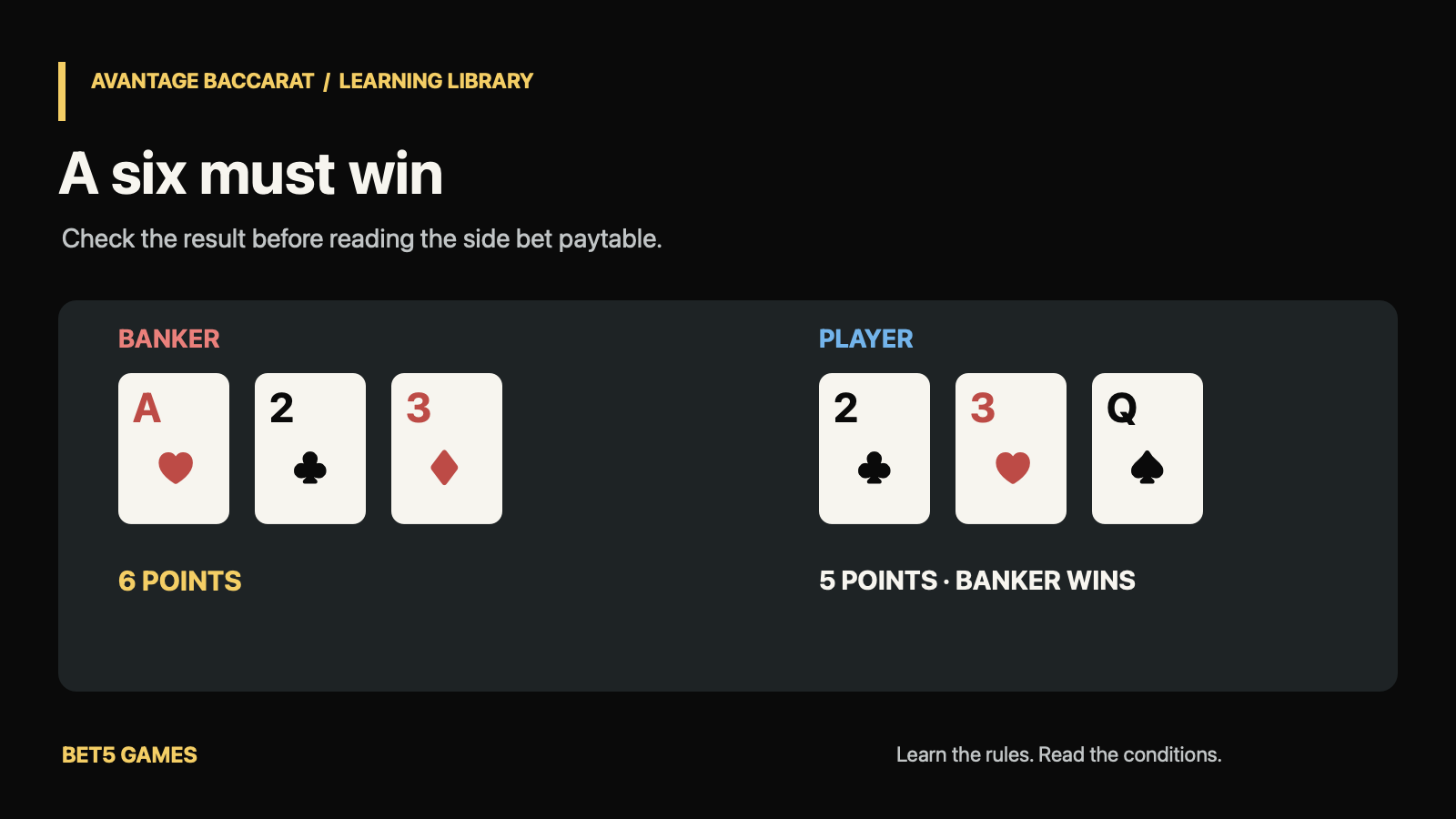
- Do not merge a pair event with the winning side when reading a corner annotation; the marked pair can belong to a losing hand.
A pair is not necessarily a suited pair
A rank pair and a suited pair impose different conditions. With multiple decks, two cards can share both rank and suit, but an ordinary initial pair rule need not require that. A Perfect Pair or another specially named option can add a suit condition or a different paytable. The label on the betting position and the actual rules take priority over a remembered name.
Settle the wager you placed
First establish whether the qualifying event occurred. Then read the payout as either profit plus return of the original stake or a total return including the stake. Mixing “to one” and “for one” language can make a correct credit appear too small. Also check any minimum main wager or separate side bet limit before assuming the interface accepted the amount you intended.
- Keep the accepted side amount separate from the main stake.
- Check whether any rule requires an accompanying main wager before the initial deal.
- Distinguish a pair annotation on the scoreboard from evidence that you actually placed a corresponding bet.
- For a credit query, retain both initial hands and the round identifier.
- A failed side bet does not change the exposure of the next wager.
This entry explains a conventional baccarat side bet. We do not present Either Pair as an available wager in our Avantage Baccarat format. Our multiple matchups and later betting windows have their own conditions. Use our terminology guide and the basic scoring explanation to keep format rules separate from a conventional pair test.
FAQs about Either Pair
Can a third seven create an initial pair?
The usual test concerns the first two cards. A matching third card does not change what those first two cards were.
Must the hand with the pair win?
An ordinary initial pair condition is separate from the main outcome. Check any variation that explicitly adds a winning requirement.
Why does a king and a jack fail when both are zero?
Zero is their baccarat point value. Their ranks remain king and jack, so they do not match.
What if both initial hands contain a pair?
Use the table’s written double qualification rule. Combined coverage does not automatically promise two payouts.
What evidence helps support check my result?
Provide the exact wager name, accepted amount, round identifier, both initial hands and the applicable paytable. A photograph of one matching card is insufficient.