A red Big Eye Boy ring does not mean Banker won. Big Eye Boy compares the structure of earlier Big Road entries, using red and blue to record the comparison. Confusing those colours with the main result board is the most common reading mistake. We explain one simple column comparison first, then show why orderly alternation and a winning streak can both create apparently consistent patterns.
Summary
- Big Eye Boy uses hollow rings derived from the Big Road.
- A colour classifies a structural comparison rather than a betting side.
Why “red means Banker” fails
On the Big Road, red usually labels a Banker win. On Big Eye Boy, the same colour has another job. It can indicate that the compared parts of the road agree under the panel’s rule. A Player win can therefore produce a red derived ring, and a Banker win can produce a blue one. You need the panel name as well as the colour.
- Identify hollow rings in the panel labelled Big Eye Boy or Big Eye Road.
- Keep main result colours separate from comparison colours.
- Check that the mark belongs to completed history rather than a preview of the next possible result.
A new column gives a manageable worked example
Compare the two completed columns
For a simple case without tails, imagine the Big Road has a Banker run of two and then a Player run of two. When Banker next wins and starts another column, Big Eye Boy compares the lengths of the two completed columns. Two and two agree, producing a red ring. That ring describes the matching lengths, not a special quality of the new Banker hand.
Change one length and the colour changes
Now keep the new Banker result but change the preceding Player run to three. The completed lengths are two and three. The new column comparison is different, so the derived mark is blue. The latest winning side is identical in both examples; the earlier column structure explains the different colour.
A result that continues an existing Big Road column uses a different comparison: the relevant position in the preceding column and the position directly above it. Matching occupancy gives one comparison result, while a boundary between an occupied and empty position gives another. Long tails require the interface’s full recording convention, so do not extend a small grid example by guessing.
| Main road trigger | Comparison | Mark | Interpretation |
|---|---|---|---|
| Banker starts a new column | Previous two runs both have two entries | Red ring | Equal completed lengths |
| Banker starts a new column | Previous runs have two and three entries | Blue ring | Different completed lengths |
| Player starts a new column | Previous two runs both have three entries | Red ring | Same comparison despite a Player win |
| Existing column continues | Relevant positions agree or differ | Red or blue | Position check, not whole lengths |
| Tie | Main outcome annotation | Not another winning side | Check the table convention |
An orderly road still is not a forecast
Alternating single wins can create regular column lengths. Long runs can also create repeated structural agreement. This is why advice to “follow red” lacks enough information even to identify a side: you must first ask what a future Banker or Player result would do to the Big Road. A preview panel can answer that conditional question without predicting which result will happen.
- Read a prediction control as an if statement about a hypothetical win, not a card prediction.
- Compare the newest Big Eye Boy ring with the completed Big Road entry that created it. Starting both charts from their first visible symbol can misalign the history.
- Expect Big Eye Boy to start later than the main result boards. It needs a comparison structure before it can record anything meaningful.
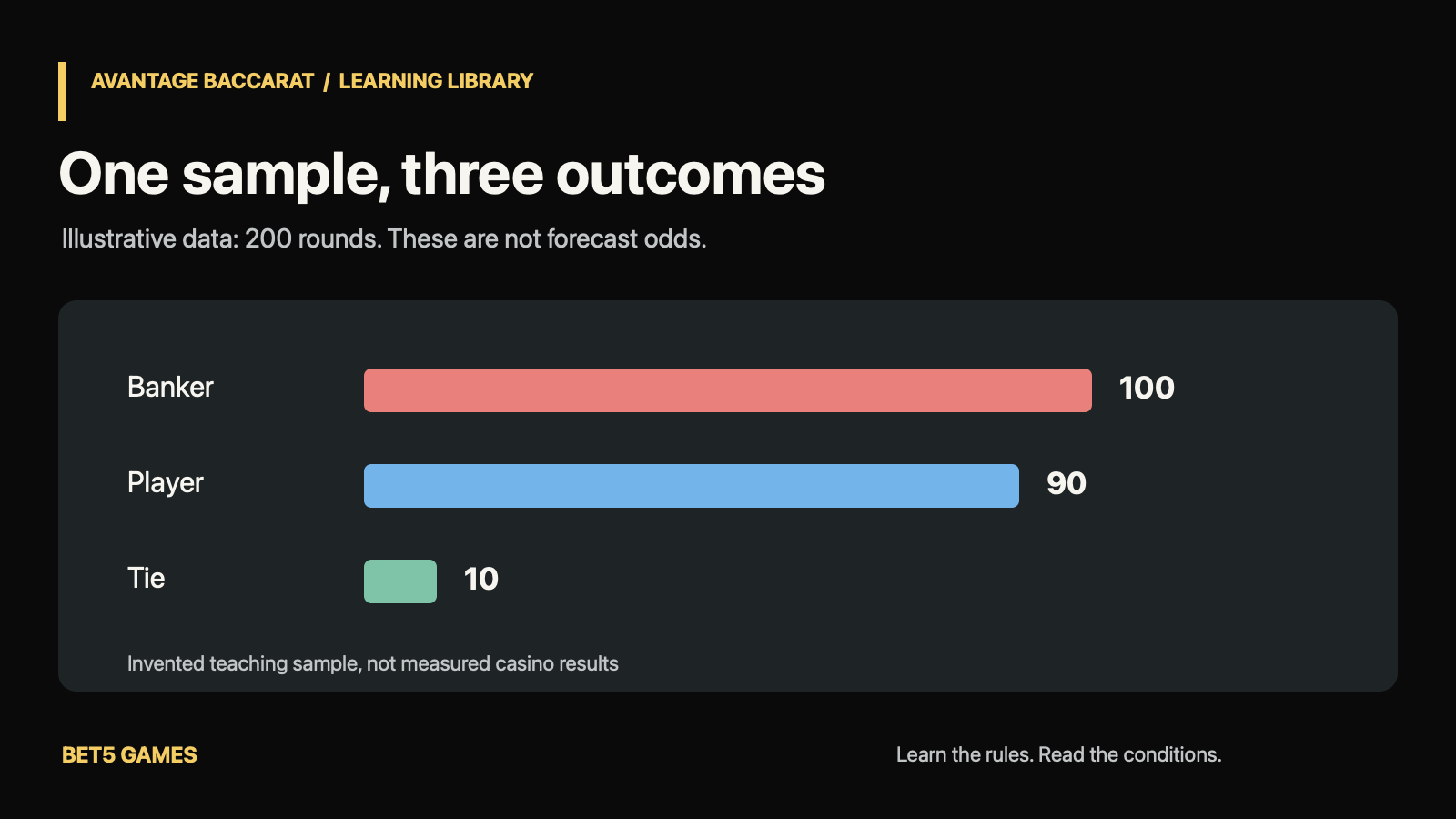
- Do not count matching derived panels as separate samples. They transform the same underlying round history rather than adding independent evidence of a future winner.
- Keep your existing stake limit independent of any colour change.
- A colour change does not replenish your budget.
Historical structure and information during a hand
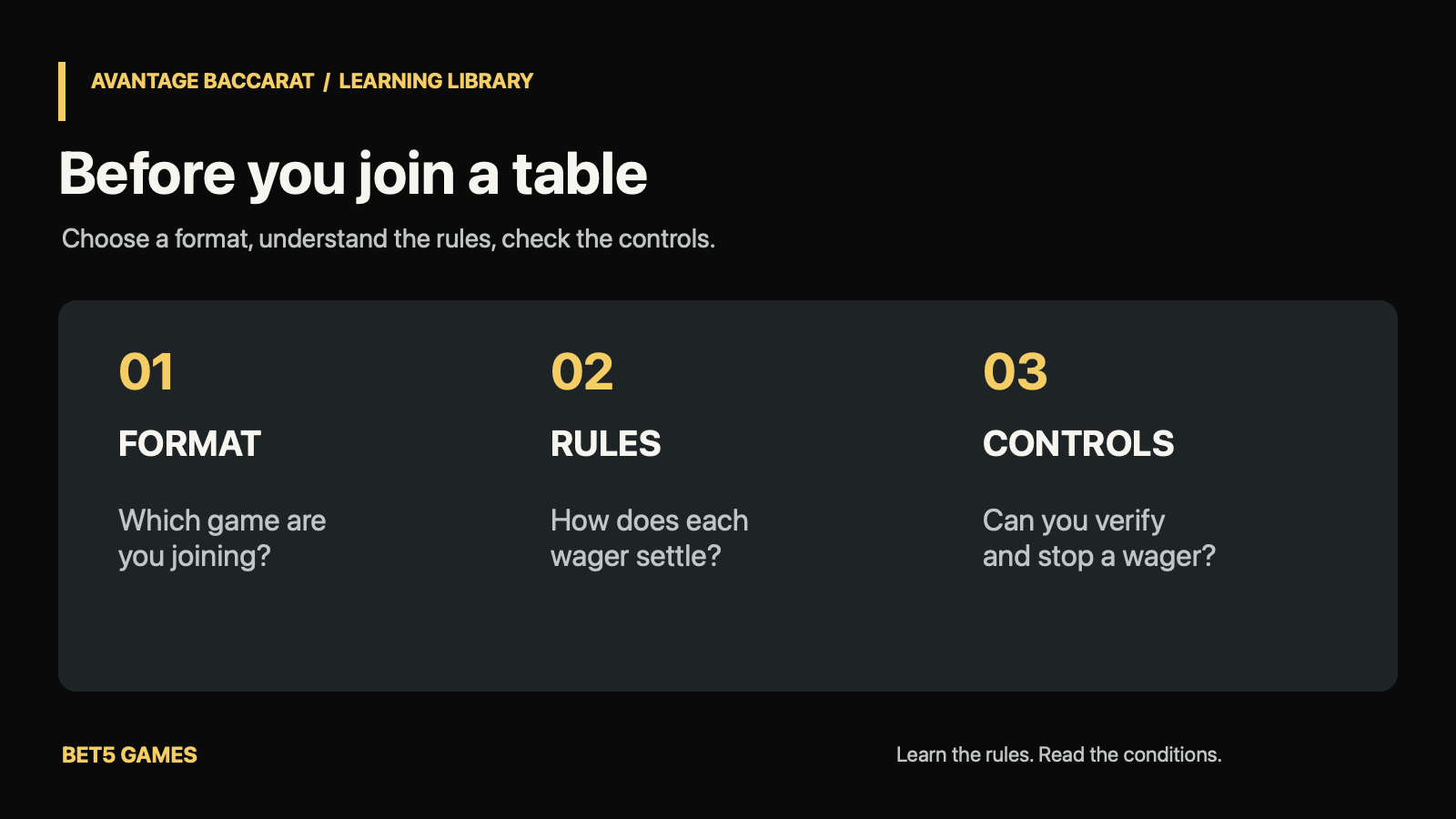
The distinction matters when you move between formats. Big Eye Boy transforms completed results. Our Avantage Baccarat matchups and betting windows concern the choices available in that format, including later opportunities during play. A historical colour rule cannot replace the current wager conditions. Use our glossary to separate those concepts before comparing strategies.
FAQs about Big Eye Boy
Why is Big Eye Boy still blank after the first hand?
A first result does not yet create the earlier columns needed for comparison. The panel begins only after enough Big Road structure exists.
Can I translate every red ring into a Banker wager?
There is no fixed translation. The conditional derived colour depends on the earlier road and on where the hypothetical next result would be recorded.
What if the road disagrees with my handwritten chart?
Check the input sequence, ties, starting position and treatment of tails. A missing round can shift every later mark even when the comparison rule itself is correct.
Does a ring show whether I won money?
Your accepted wagers and settlement history answer that. Big Eye Boy has no record of which side you selected or how much you staked.