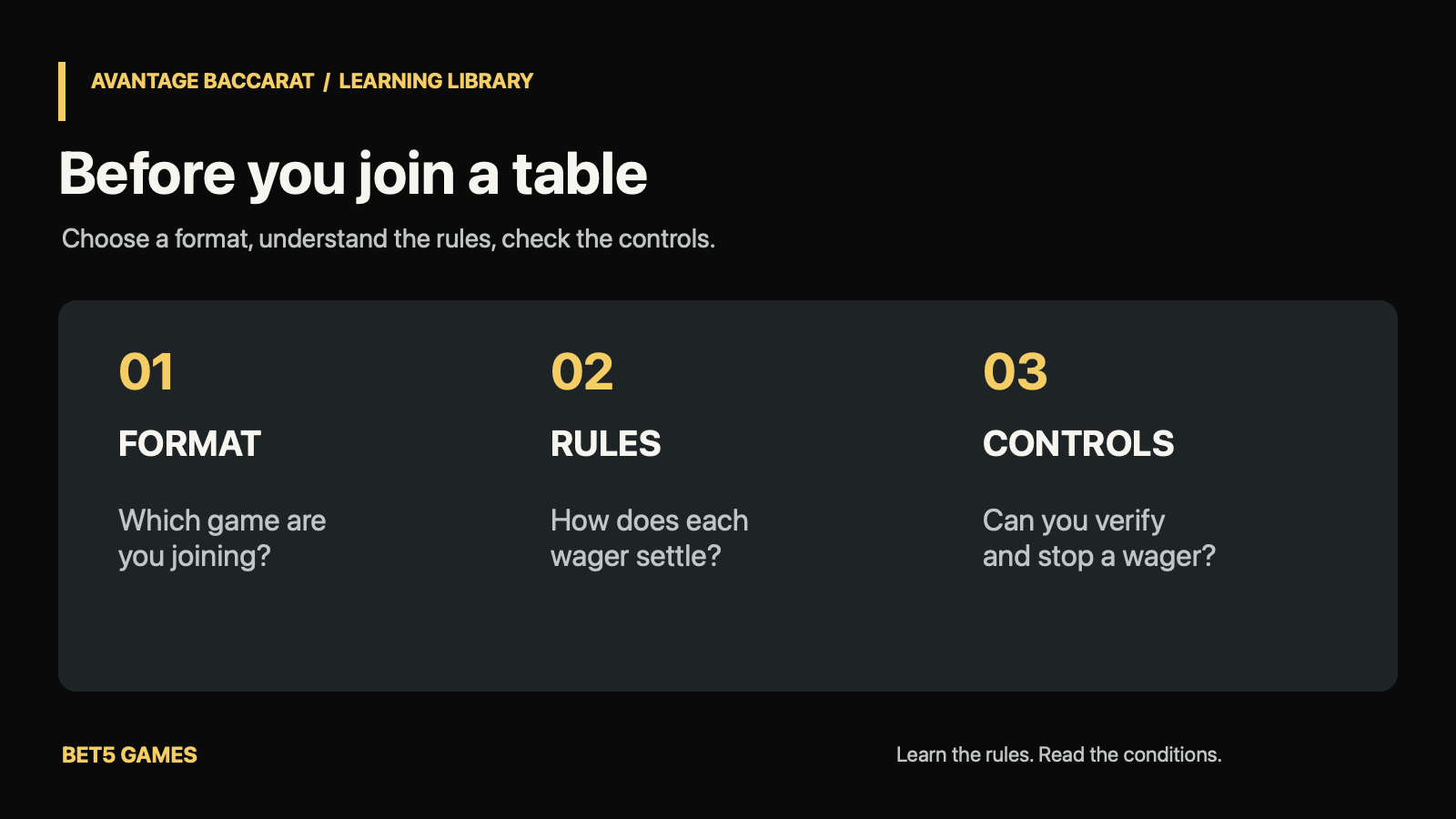
Baccarat strategic betting begins with decisions you actually control: the game you enter, the wagers you understand, the money exposed and the point when you stop. It does not require a secret road pattern. We build a practical before, during and after session plan, including a simple budget example. Conventional drawing rules and Avantage Baccarat’s matchup and timing decisions belong in that plan for different reasons.
Summary
- Learn the available decisions before choosing a stake.
- Set one complete exposure limit, including optional wagers.
- Review acceptance and settlement as separate events.
- A spending plan can control exposure without guaranteeing a profit.
Mark the boundary between a decision and an outcome
| Item | What you can decide | What the choice cannot guarantee |
|---|---|---|
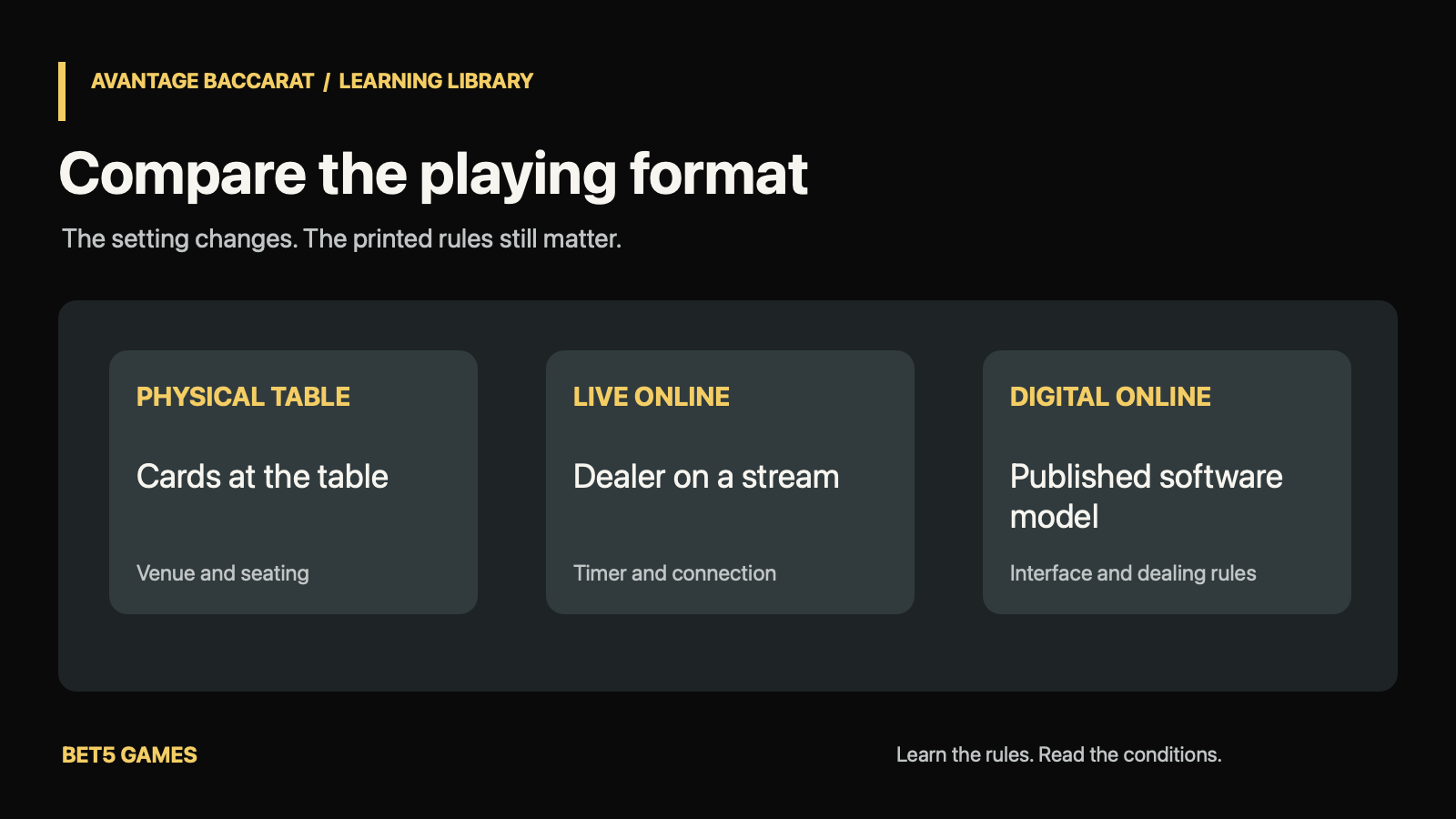
| Game format | Whether its rules and controls suit you | A profitable session |
| Wager selection | Which permitted condition you accept | The cards needed for that condition |
| Stake | The amount you choose within the limits | Recovery of an earlier loss |
| Participation | Whether to skip or end the session | That a later result would have favoured you |
| Rules review | Whether you understand the settlement | That a familiar label means identical rules everywhere |
In conventional baccarat, the drawing rules determine additional cards. You do not decide to hit or stand as though you were playing blackjack. A plan that treats the scoreboard as a way to choose the dealer’s next draw misunderstands the game before its staking advice even begins.
Before the session: define an affordable loss
Choose an amount you can afford to lose and a stopping time before looking at a road. The amount should not depend on recovering an earlier account balance. “I will stop after one hundred units” is a boundary; “I will stop once I get back to where I started” is a target that can keep moving the session into further risk.
A one hundred unit illustration
Suppose your selected session loss limit is one hundred units. If the session is thirty units down, seventy units remain within that original loss allowance. That remaining allowance is not a recommendation to stake seventy at once. It simply makes the boundary visible. Also distinguish net loss from turnover: repeatedly wagering returned money can create more than one hundred units of gross stakes without creating the same net loss.
- Include side bets and every additional window in the maximum money exposed on a round.
- Keep essential spending and unrelated visit costs outside the wagering allowance.
- Choose a time boundary as well as a money boundary when convenient access makes stopping easy to postpone.
- State what happens when a required stake exceeds the remaining allowance: the plan ends rather than expanding its budget.
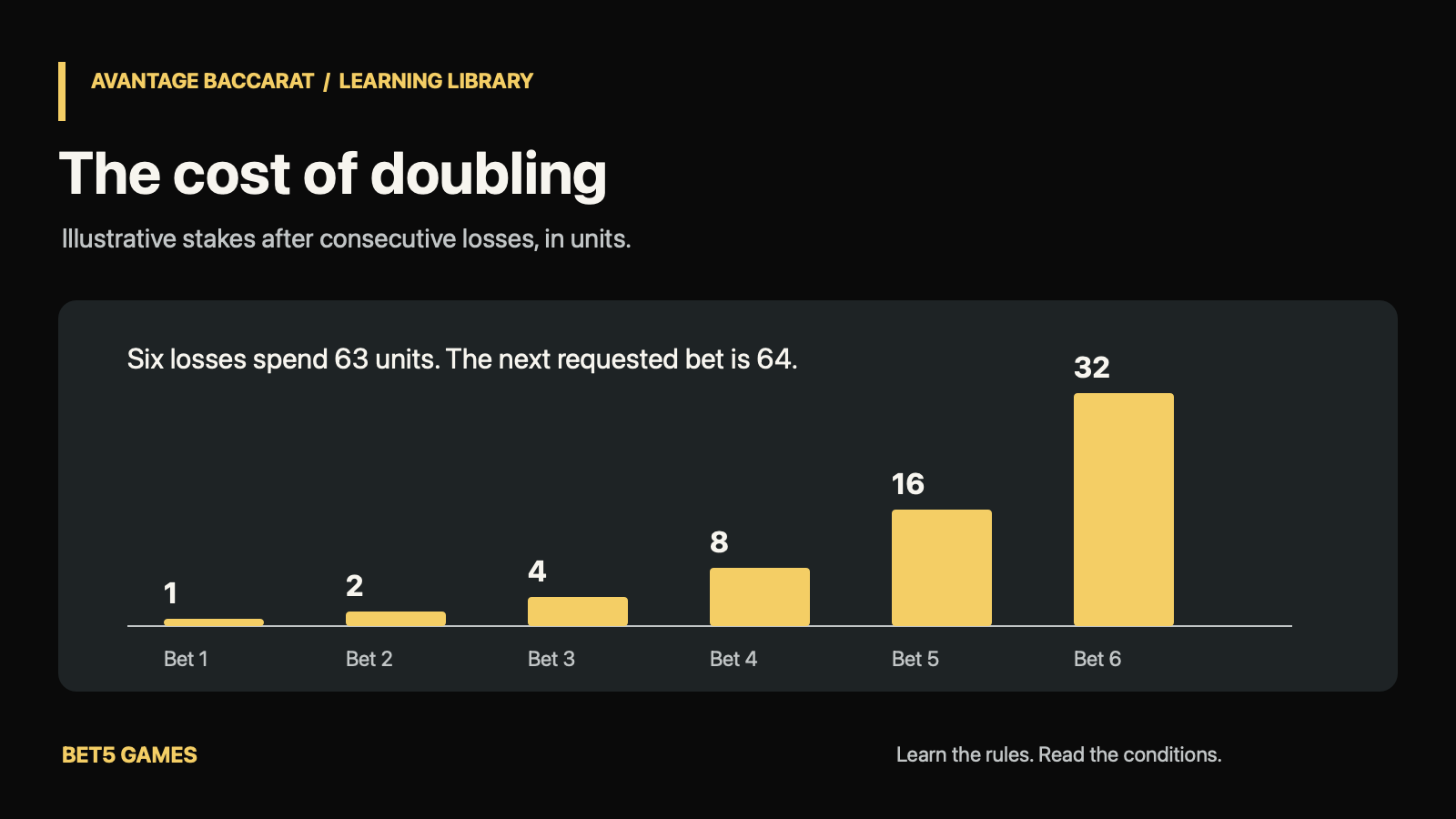
The useful stake size is one whose full loss you can accept within that plan. Consistency can make records easier to follow, but a fixed stake does not change the underlying return on a wager. Likewise, a progression is not safer merely because its increases follow a written sequence.
| Budget term | What the amount tracks |
|---|---|
| Session loss limit | The net loss boundary you chose before playing |
| Remaining allowance | The unused part of that original boundary |
| Gross stakes | Every accepted stake, including money wagered again |
| Available balance | The account amount presently available under its rules |
| Pending credit | An unresolved item, not money already available to spend |
During play: confirm, then interpret
Confirm what the game accepted
Read the final accepted stake before treating a chip animation as a completed decision. A deadline, minimum or repeat control can make the actual amount differ from an earlier selection. If the screen freezes, review the official round record rather than placing another wager to compensate for uncertainty.
- Check the wager name as well as the amount.
- Look for the final accepted state before betting closes.
- Verify that a repeat control has not restored an optional chip you intended to remove.
Interpret the result under its own conditions
A main wager and a side bet can settle differently on the same hand. A winning Player result does not make every Player related side condition true. Separate the qualifying event from the payout calculation, then account for all accepted wagers before deciding that the balance change is wrong.
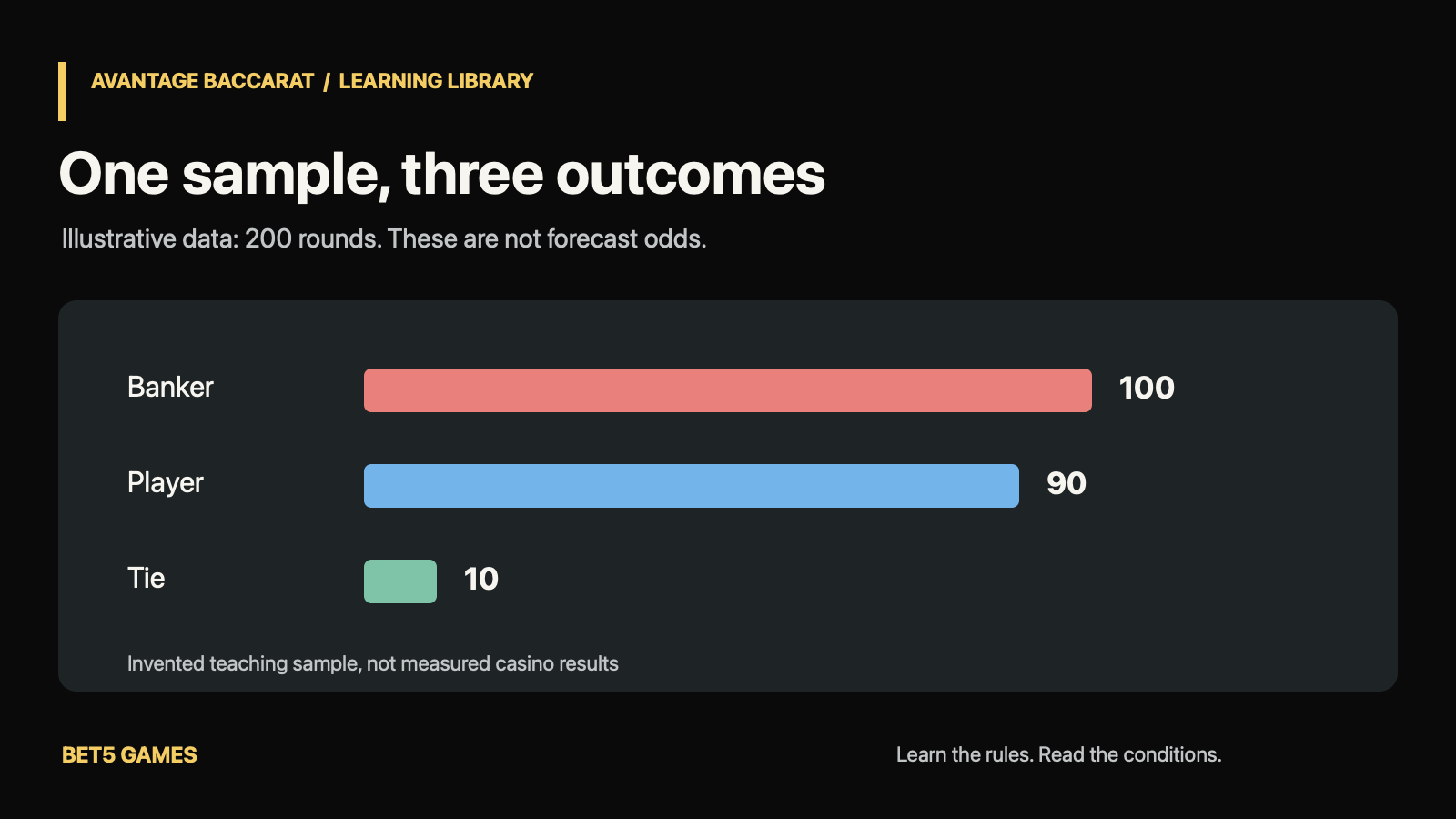
The statistical analysis guide shows why counts alone cannot explain money returned. If larger stakes fall on losing outcomes, a favourable looking run of winners can still produce a negative session. Keep actual amounts in the record rather than summarising performance as a percentage of green balance changes.
- Save the round identifier when a settlement looks unclear.
- Compare both completed hands and any required card count.
- Read whether a quoted return includes the original stake.
- Ask about a specific rule discrepancy before making another wager.
- Pause if frustration changes the amount you planned to expose.
In Avantage Baccarat, add matchup and timing to the plan
Our Avantage Baccarat format uses six players, a rotating bank and five player versus bank matchups. Later betting opportunities, including post card reveal windows, create decisions beyond the familiar opening stake on a conventional table. Learn which matchup each wager covers and which information is available when that window is open.
Additional opportunities should share the same session boundary. Allocating the entire budget separately to each window would multiply exposure while preserving only the appearance of a limit. A later view of the cards also does not establish a guaranteed profitable return: the current wager conditions still matter.
- Identify the matchup before selecting an amount.
- Read the available window and its stated wager conditions.
- Count earlier accepted exposure before adding another decision on the same deal.
- Skip an unfamiliar opportunity until you can explain its possible loss.
After the session: review the process without inventing a signal
Separate a good procedure from a lucky result. You can follow your limits and lose; you can ignore them and happen to win. The second outcome does not validate the process. A useful review asks whether you understood the rules, confirmed accepted amounts and respected the boundary you chose in advance.
Do not turn an unfinished support query or a losing sequence into an obligation to continue. The sure win formula analysis explains how recovery targets can conceal expanding stakes. End the financial decision, retain the specific record and resolve the question separately.
- Record the final available balance and any genuinely pending item separately.
- Note any unclear rule or control to resolve before a later session.
- Count abandoned progressions as results rather than hiding them from the history.
- Keep a win from retrospectively changing the limit you should have followed.
FAQs about baccarat betting plans
Is skipping a round a sensible part of a plan?
Yes. It gives you time to check a rule, understand a settlement or decide that the session should end. An available betting window does not create a duty to use it.
Should I follow or oppose a long Banker streak?
The streak describes completed results and supplies no guarantee for either response. Keep chart interpretation separate from the rules and exposure limit of a new wager.
Does a fixed stake make baccarat profitable?
It can simplify tracking, but it does not by itself change the probability or payout of the selected event. Its practical benefit is clarity about exposure, not a promised return.