In baccarat, “shoe” can mean the container holding the cards or the run of play dealt from that prepared stack. It does not mean one hand. That double meaning explains phrases such as “the dealer changed the shoe” and “twenty rounds into the shoe”. We separate the equipment from the dealing sequence, then follow what happens between preparation and the next reset.
Summary
- The physical shoe holds cards ready for dealing.
- A shoe can also mean the sequence of hands before the next reset.
- Deck count and preparation procedures belong to the specific game.
- A round and a shoe are different units of play.
The object on the table
A physical shoe presents prepared cards for the dealer to draw in order. Baccarat commonly uses multiple decks, but the exact number belongs in the table rules. The size or shape of a container is not a reliable way to identify that number. Nor does a full looking shoe tell you the next card’s rank.
The device does not decide whether a third card is required. The hand rules do that. Some completed hands use only the initial four cards across Player and Banker; others need an additional card for one side or both. The same deck count can therefore produce different numbers of completed rounds.
| When someone says… | They usually mean… |
|---|---|
| “Cards are coming from the shoe” | The physical dealing container, not a single hand |
| “The shoe has just started” | The prepared dealing sequence has recently begun |
| “That happened on the previous shoe” | A different sequence before the current reset |
| “This is round twenty” | One hand’s position within the recorded play |
| “The cut card appeared” | A stopping procedure is due under the table’s rules |
| “Those cards were burned” | Specified cards removed under the preparation procedure |
| “The deck count differs” | Games use different quantities of prepared cards |
Follow one shoe from preparation to reset
Prepare the cards
Staff follow the game’s preparation procedure before loading or presenting the cards. A shuffle, a cut and a burn operation are separate actions. The details depend on the table, so a short stream view cannot establish that you have seen every preparation step.
Deal successive rounds
Each round consumes the cards required by the drawing rules. The scoreboard accumulates results as the dealer continues through the prepared sequence. It can start another column without starting another shoe, and it can scroll older columns away while the same shoe continues.
- A new result circle identifies another completed outcome, not another complete set of cards.
- A full scoreboard column is a layout event. It does not establish that anyone shuffled.
- A change in the number of cards used by successive hands can be normal under the drawing rules.
- A shoe identifier is more useful than a familiar looking pattern when you return after a connection interruption.
Reach the stopping point
A cut card marks a point in the prepared stack that triggers the table’s end of shoe procedure. It is not an ordinary scoring card and does not reveal the undealt ranks behind it. The precise final dealing routine comes from the house rules, rather than from a universal promise that every table stops at the identical instant.
What changes when the cards are digital?
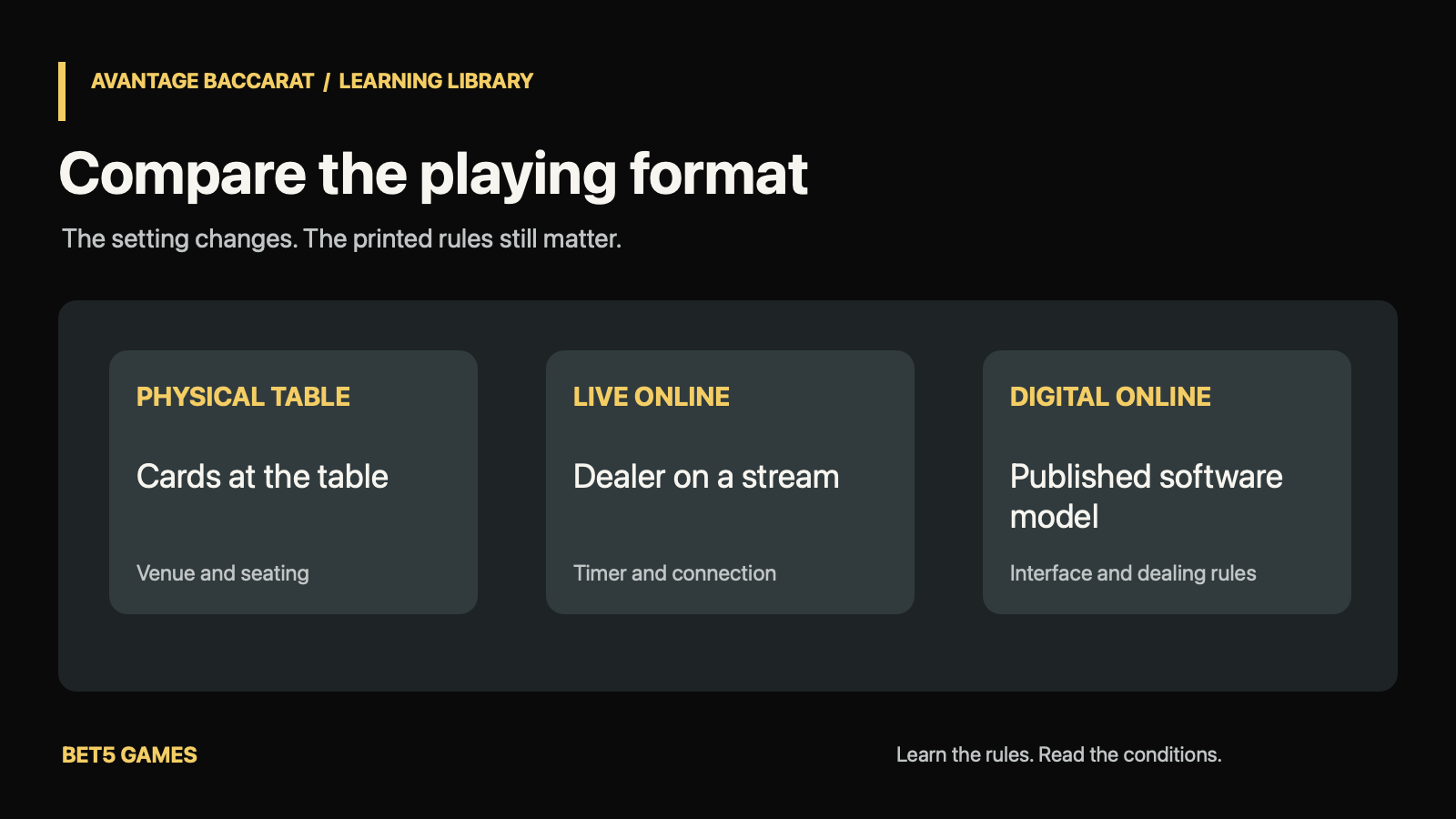
A live online table can show a real dealer and a physical shoe. A digital game can present a virtual equivalent with its own generation and reset model. An animation alone cannot tell you whether the game uses a persistent virtual shoe, a fresh shuffle each round or some other published configuration. Read the game information instead of inferring the model from decorative graphics.
- Look for the stated deck and reset model before using a shoe based calculation.
- Keep round identifiers when a settlement needs review, even if the interface also provides a shoe number.
- Ask support about the particular table if its preparation or reset explanation is unclear.
- Compare manual and virtual dealing models before assuming two shoe histories use identical reset conditions.
- Confirm any mid shoe joining restriction in the actual table rules.
- Distinguish cards removed during preparation from cards used in scored hands.
Our Avantage Baccarat format adds multiple player versus bank matchups and additional betting windows. Knowing what a shoe is helps you follow the cards, but it does not identify which matchup or window a wager covers. Those conditions still need a separate rules check.
FAQs about baccarat shoes
How many rounds fit in one shoe?
There is no single number to infer from the word alone. Deck count, cards consumed by each hand, burn procedures and the cut card position all affect the answer.
Can I join halfway through a shoe?
That depends on the table’s entry rules and available seats. Joining an existing sequence does not entitle you to recover anything that happened before you arrived.
Where should I record a disputed hand?
Keep the round identifier, shoe identifier if available, time and accepted wager. Those details identify a settlement question more precisely than the equipment name alone.